
Save books, track your reading goal, and leave reviews. Free to join.
Create free account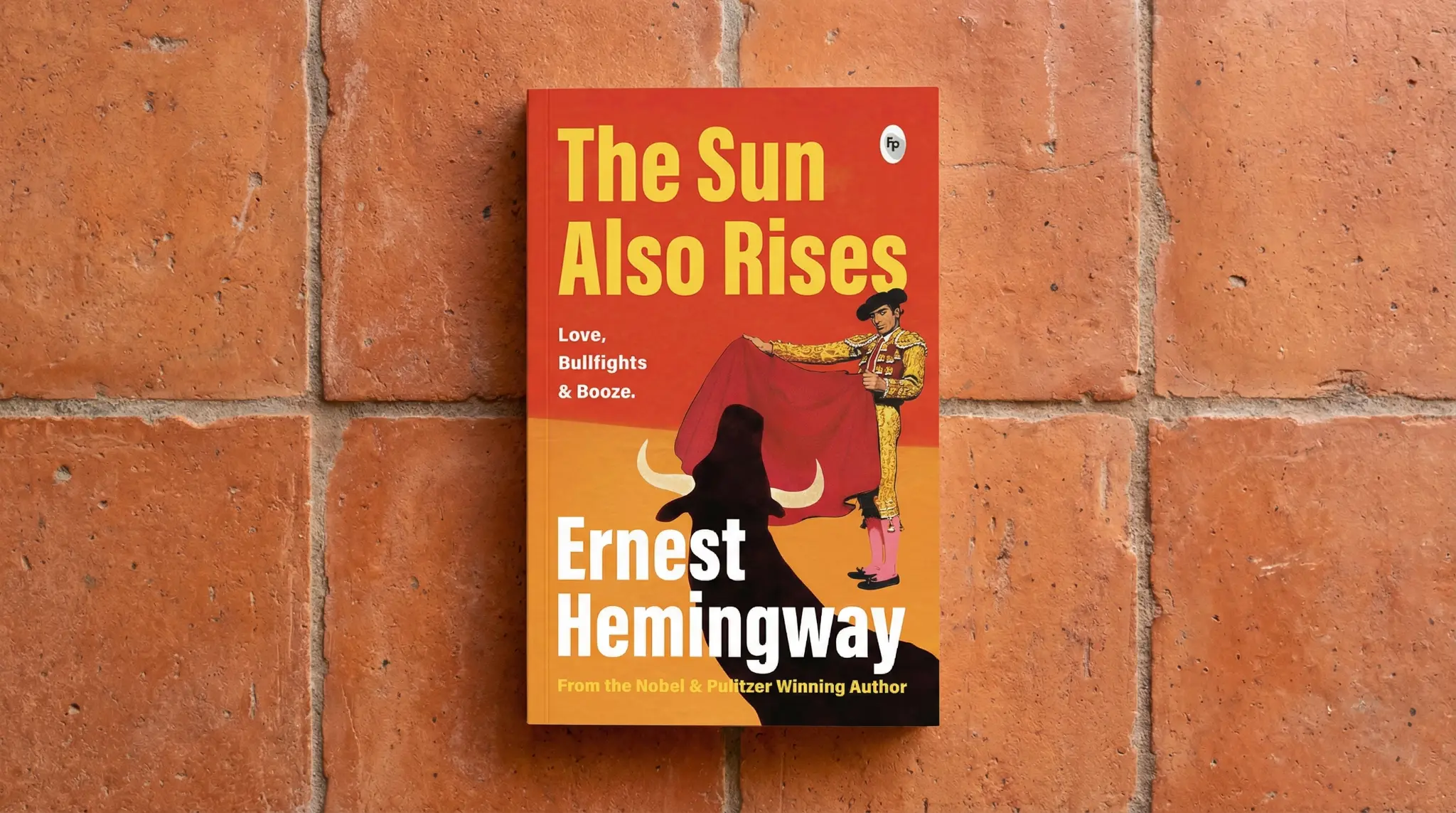
"A portrait of the Lost Generation adrift. Hemingway's first novel follows Jake Barnes and Lady Brett Ashley through 1920s Paris and Pamplona — a study in aimlessness, impossible love, and the search for authenticity amid post-war emptiness."
Get This Book
Available on Amazon
Buy on AmazonListen on AudibleAs an Amazon Associate I earn from qualifying purchases.
Key Takeaways
- Iceberg theory reveals more through omission than declaration.
- The Lost Generation persists through stoic endurance, not transcendence.
- Bullfighting embodies grace confronting mortal risk.
- Post-war malaise yields cyclical resilience.
- Dialogue subtext carries emotional weight.
- Spain's primal rituals contrast Parisian artifice.
Full Review
The Sun Also Rises captures the restless disillusionment of American and British expatriates wandering through 1920s Paris and Spain. Ernest Hemingway's first novel follows Jake Barnes, a wounded war veteran unable to consummate his love for the magnetic Lady Brett Ashley, and their circle of hard-drinking friends chasing fleeting pleasures. The story moves from Left Bank cafes to Pamplona's bull-running festival, where tension builds amid fiesta frenzy.
Hemingway's spare prose defines the book. Short sentences, minimal description, and dialogue heavy with subtext create an iceberg effect, where much lies beneath the surface. The characters speak in clipped rhythms that reveal more through omission than declaration. This style mirrors their emotional restraint, their inability to confront feelings directly.
The novel resists easy summary. It is less plot-driven than mood-driven, a study in aimlessness and the search for authenticity amid post-war emptiness. Jake narrates with quiet resignation, observing Brett's affairs, Robert Cohn's jealousies, and the group's collective avoidance of deeper truths.
Paris and the expatriate circle
The Paris sections establish the characters' fragile equilibrium. Jake works as a journalist, living modestly while Brett drifts through lovers. Robert Cohn, a wealthy Jewish writer, pursues Brett desperately, disrupting group dynamics. Bill Gorton and Mike Campbell complete the circle, each nursing private wounds beneath banter.
Hemingway renders Paris vividly through sensory detail. Cafe tables line boulevards. Absinthe flows endlessly. Nightlife pulses with jazz and conversation. Yet beneath the glamour lies disconnection. Characters drink to dull existential ache, forming bonds too brittle to endure scrutiny.
Cohn's insecurity drives early conflict. His boxing obsession compensates for outsider status. Brett toys with him flirtatiously, then dismisses him cruelly. Jake observes with detached sympathy, caught between loyalty and frustration. These relationships set patterns that fracture during the fiesta.
The Paris life represents escape without resolution. Expatriates fled war's trauma but carried it internally. Hemingway shows freedom without purpose breeds restlessness. Social rituals fill time without satisfying deeper longings.
Journey to Pamplona
The group travels to Spain for the San Fermín festival, where bull-running and fights promise primal intensity. Pamplona transforms the narrative. Fiesta energy contrasts Parisian ennui. Crowds surge chaotically. Drink flows ceaselessly. Bullfights provide cathartic violence.
Hemingway's bullfight descriptions rank among his finest writing. He dissects aficionado aesthetics: bravery, technique, rhythm with death. Pedro Romero, the young matador, embodies grace under pressure. Jake admires this purity, contrasting his own impotence.
Brett's fascination with Romero escalates tension. Cohn assaults Jake and Mike in jealous rage. Group cohesion unravels completely. Fiesta exposes fault lines masked by Parisian civility. Raw emotions surface without social restraint.
Spain represents authenticity the characters crave but cannot sustain. Bullfights offer temporary transcendence. Daily life returns inevitable compromises. Hemingway suggests moments of truth exist but prove ephemeral.
Love, loss, and masculinity
Jake and Brett's relationship forms the emotional core. War injury rendered Jake impotent, symbolizing Lost Generation castration. Brett loves him genuinely but seeks physical satisfaction elsewhere. Their bond endures through mutual understanding of impossibility.
Hemingway explores masculinity through multiple lenses. Jake's stoicism masks pain. Cohn's aggression compensates insecurity. Romero's artistry affirms ideal manhood. Mike's drunken bluster hides bankruptcy. Each man navigates post-war identity crisis differently.
Brett embodies liberated womanhood, yet trapped by desire. Her beauty commands attention, but emotional emptiness persists. Affairs provide distraction, not fulfillment. Hemingway treats her sympathetically, revealing complexity beneath glamour.
The novel questions traditional roles without resolution. Characters experiment with freedom but discover internal constraints stronger than external ones. Love persists in distorted forms, unable to resolve fundamental incompatibilities.
Hemingway's iceberg theory
The iceberg theory dominates style and substance. Hemingway omits explicit psychology, trusting readers to infer emotions from action and dialogue. Jake never states lovesickness directly. Brett's despair emerges through restless movement. Restraint amplifies impact.
This technique mirrors characters' emotional discipline. They avoid vulnerability, confronting feelings indirectly through drink, travel, violence. Prose restraint reflects internal censorship. What characters withhold reveals more than declarations.
Dialogue rhythms capture authenticity. Incomplete sentences, interruptions, repetitions mimic real speech. Subtext carries emotional weight. Readers decode relationships through negative space.
Iceberg structure invites rereading. Initial encounters emphasize surface action. Subsequent readings reveal deepening layers of loss, regret, resignation.
The Lost Generation critique
Hemingway famously rejected Gertrude Stein's "Lost Generation" label while using it as epigraph. Characters appear battered but resilient. They persist despite disillusionment, finding meaning in ritual, friendship, nature.
Spain offers temporary salvation. Fishing trips restore Jake's equilibrium. Bullfights affirm life's intensity. Nature contrasts human messiness with elemental purity. Hemingway suggests stoic acceptance as response to existential void.
Critics debate the novel's cynicism versus affirmation. Surface despair yields to endurance. Characters survive without transcendence. Sun rises daily despite human futility. Biblical epigraphs frame cyclical resilience.
Post-war malaise permeates without overwhelming. Hemingway balances bleakness with vitality. Fiesta chaos affirms life force even amid personal wreckage.
Enduring stylistic influence
The Sun Also Rises established Hemingway's voice: declarative, rhythmic, unadorned. Influence extends across generations. Mailer, McCarthy, Carver adopted pared-down aesthetics. Modern minimalists trace their lineage to this debut.
The novel captured its zeitgeist perfectly. Jazz Age expatriates embodied post-war drift. The Pamplona trip mythologized the running of the bulls. The book defined 1920s Paris in popular imagination.
Cultural impact persists. Phrases like "grace under pressure" entered the lexicon. Bullfighting fascination endures. The Jake-Brett dynamic archetypes doomed romance.
Hemingway's debut announced a major talent. Subsequent works expanded his range while retaining the core style. The Sun Also Rises remains the purest distillation of his signature voice.
Final Thoughts
The Sun Also Rises endures as Hemingway's purest novel, capturing Lost Generation malaise with unmatched precision. Sparse prose and emotional restraint create haunting authenticity. Jake and Brett embody impossible love's tragedy. A debut masterpiece that defined the 20th-century literary voice.
Enjoyed this review?
Subscribe for more curated book recommendations and insights from the 200 books journey.
No spam. Unsubscribe anytime.
Get This Book
Available on Amazon
Buy on AmazonListen on AudibleAs an Amazon Associate I earn from qualifying purchases.
Also Worth Exploring
Tools and services I use and recommend.
Some links are affiliate links. I only recommend things I genuinely use.
Get Book Recommendations
Weekly picks from the 200 books journey.
No spam. Unsubscribe anytime.
Keep Reading
Read Next
More from Fiction worth your time


Reader Reviews
No reviews yet. Be the first to share your thoughts!