
Save books, track your reading goal, and leave reviews. Free to join.
Create free account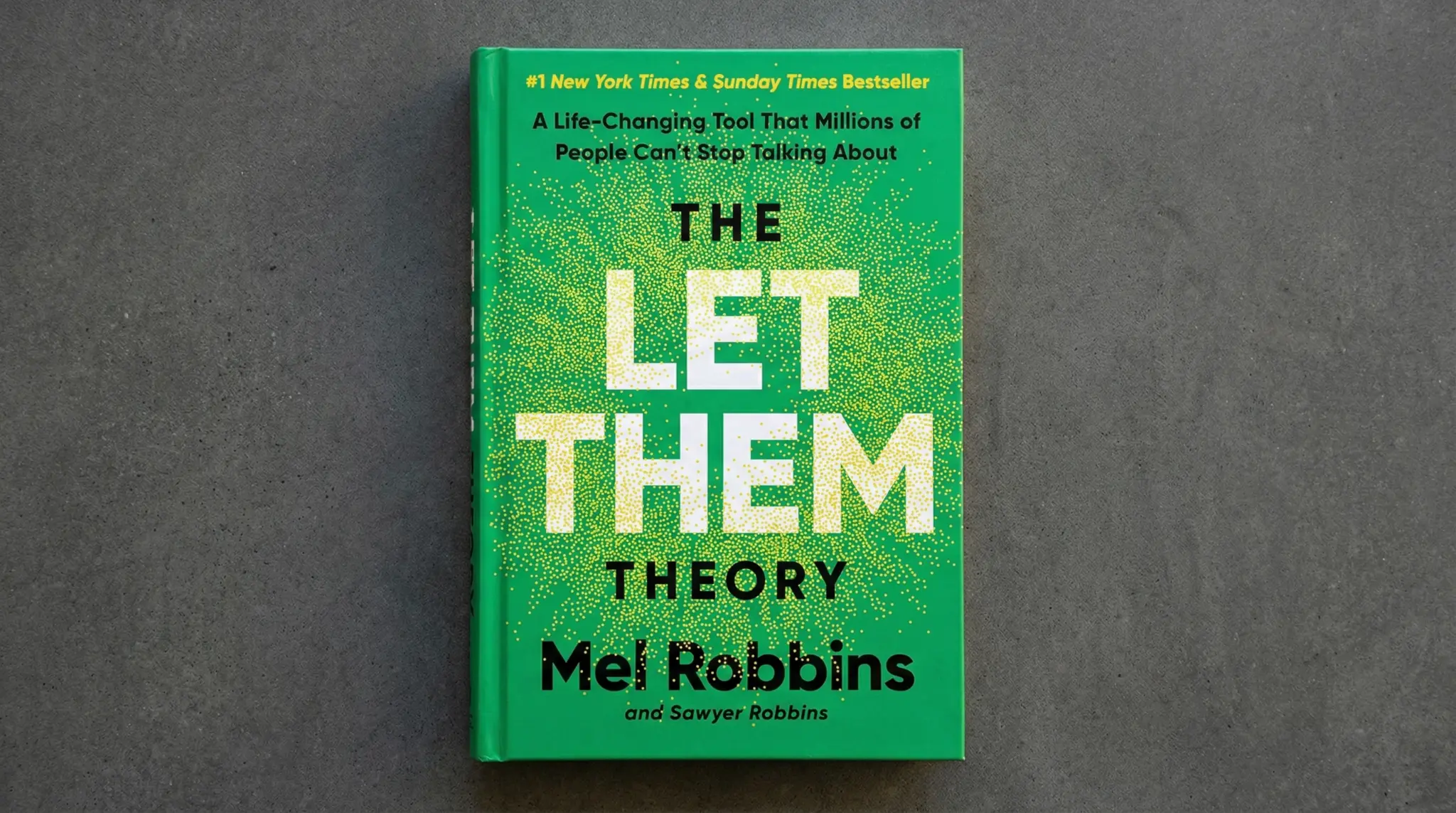
"A mindset shift for letting go and reclaiming your power. Robbins's two-part theory — Let Them and Let Me — cuts through the exhausting need to control others and redirects that energy toward personal boundaries, clarity, and growth."
Get This Book
Available on Amazon
Buy on AmazonListen on AudibleAs an Amazon Associate I earn from qualifying purchases.
Key Takeaways
- Let Them releases control; Let Me reclaims personal power.
- People's actions reflect their frame of reference, not your value.
- Boundaries protect energy without emotional labor.
- Judgment says more about the judge than the judged.
- Detachment starves drama; action builds momentum.
- Practice creates neural pathways for instinctive freedom.
Full Review
The Let Them Theory is Mel Robbins's straightforward guide to releasing the exhausting need to control others and focusing instead on what you can actually influence: yourself. Robbins presents a simple but radical idea: when people show you who they are through their actions, opinions, or choices, stop trying to change them. Let them be, and let yourself respond from a place of strength and clarity.
The book builds on Robbins's signature style of blending personal stories, neuroscience insights, and practical steps. She argues that most emotional suffering comes from fighting reality, especially the reality of other people's free will. The theory splits into two parts: "Let Them" releases attachment to others' behavior, and "Let Me" redirects energy toward personal boundaries, choices, and growth. It is a tool for relationships, work, family, and self-doubt.
The core of letting go
Robbins opens with the frustration of trying to control the uncontrollable. People ghost texts, judge decisions, ignore boundaries, or choose differently than expected. The natural response is to argue, explain, or fix. But that reaction keeps you stuck in a cycle of anxiety and resentment.
"Let Them" interrupts that cycle. It is a mental pause: let them cancel, let them misunderstand, let them walk away. This is not passive indifference. It is active detachment rooted in acceptance. Robbins explains that people act from their own frame of reference, shaped by their experiences, fears, and priorities. You cannot rewrite their story. Fighting it only drains your energy.
The second half, "Let Me," shifts focus inward. Let yourself set boundaries, pursue goals, and build the life you want. This balance prevents two traps: over-involvement that breeds resentment, or cold detachment that isolates. Together, the theory creates emotional freedom.
Why control fails
A key chapter unpacks the neuroscience behind the urge to control. The brain craves predictability, so uncertainty triggers stress responses. Trying to manage others' reactions feels like security, but it backfires. People resist force, doubling down on their choices.
Robbins shares stories from her life and podcast listeners. A parent obsesses over a child's college rejection, trying to fix the outcome. A friend chases validation from unreliable people. In each case, control creates more pain. Letting go reveals the truth: their choices are theirs, and your peace does not depend on them.
She emphasizes the seesaw effect in relationships. Over-control makes you feel inferior, chasing approval. Pure detachment feels superior but lonely. Balance comes from "Let Them" paired with "Let Me," where you honor their autonomy while owning yours. Healthy dynamics emerge naturally.
Applying the theory daily
Robbins provides practical scenarios for practice. In friendships, let unreliable people fade without confrontation. At work, let colleagues take credit while you focus on results. In romance, let mismatched partners go instead of convincing them to stay.
The technique starts with noticing. When frustration rises, pause and say "Let Them" silently. This creates space between trigger and reaction. Then ask "Let Me": what boundary needs setting? What energy needs redirecting? Repetition builds the habit.
She addresses common objections. Does this mean tolerating toxicity? No. It means clear boundaries without emotional labor. Does it apply to family? Yes, but with compassion for their limitations. The theory scales from small annoyances to life-altering decisions.
Handling judgment and drama
Judgment wounds deeply because it feels personal. Robbins reframes it: opinions reflect the judge's insecurities, not your worth. Let them think whatever they want. Your job is living authentically.
Social media amplifies drama. Seeing curated lives triggers comparison. Let them post perfection. Let yourself scroll less and create more. Robbins shares her prom story: her son skipped tradition, and her instinct was to intervene. Her daughter's advice to "let them" freed her.
Drama thrives on reaction. Gossipers want engagement. Let them talk. Redirect energy to goals. This starves negativity while building resilience. Over time, detachment becomes intuitive.
Boundaries and self-respect
"Let Me" demands boundary work. Say no without justification. Walk away from draining dynamics. Invest in reciprocal relationships. Boundaries are not walls; they are filters protecting energy.
Robbins stresses self-validation. External approval is unreliable. Build internal certainty through small wins. Track progress in journals. Celebrate choices aligning with values. Self-trust compounds.
The theory heals perfectionism. Let others succeed differently. Let yourself experiment imperfectly. Growth favors action over flawless execution. Boundaries preserve bandwidth for what matters.
Long-term transformation
Sustained practice rewires neural pathways. Initial effort fades into instinct. Relationships improve as you stop managing others. Clarity emerges from reduced mental clutter.
Robbins warns of resistance. The ego clings to control as identity. Lean into discomfort. Results prove the shift: lighter energy, better connections, accelerated goals.
The theory extends to self-sabotage. Let the old version of you fade. Let the new you emerge through deliberate choices. Transformation happens internally first.
Final Thoughts
The Let Them Theory distills emotional freedom into two words with profound impact. Mel Robbins delivers practical wisdom for releasing control and embracing agency. The balance of detachment and self-focus transforms relationships and self-worth. Simple on the surface, revolutionary in practice.
Enjoyed this review?
Subscribe for more curated book recommendations and insights from the 200 books journey.
No spam. Unsubscribe anytime.
Get This Book
Available on Amazon
Buy on AmazonListen on AudibleAs an Amazon Associate I earn from qualifying purchases.
Also Worth Exploring
Tools and services I use and recommend.
Some links are affiliate links. I only recommend things I genuinely use.
Get Book Recommendations
Weekly picks from the 200 books journey.
No spam. Unsubscribe anytime.
Keep Reading
Read Next
More from Personal Development worth your time


Reader Reviews
No reviews yet. Be the first to share your thoughts!