
Save books, track your reading goal, and leave reviews. Free to join.
Create free account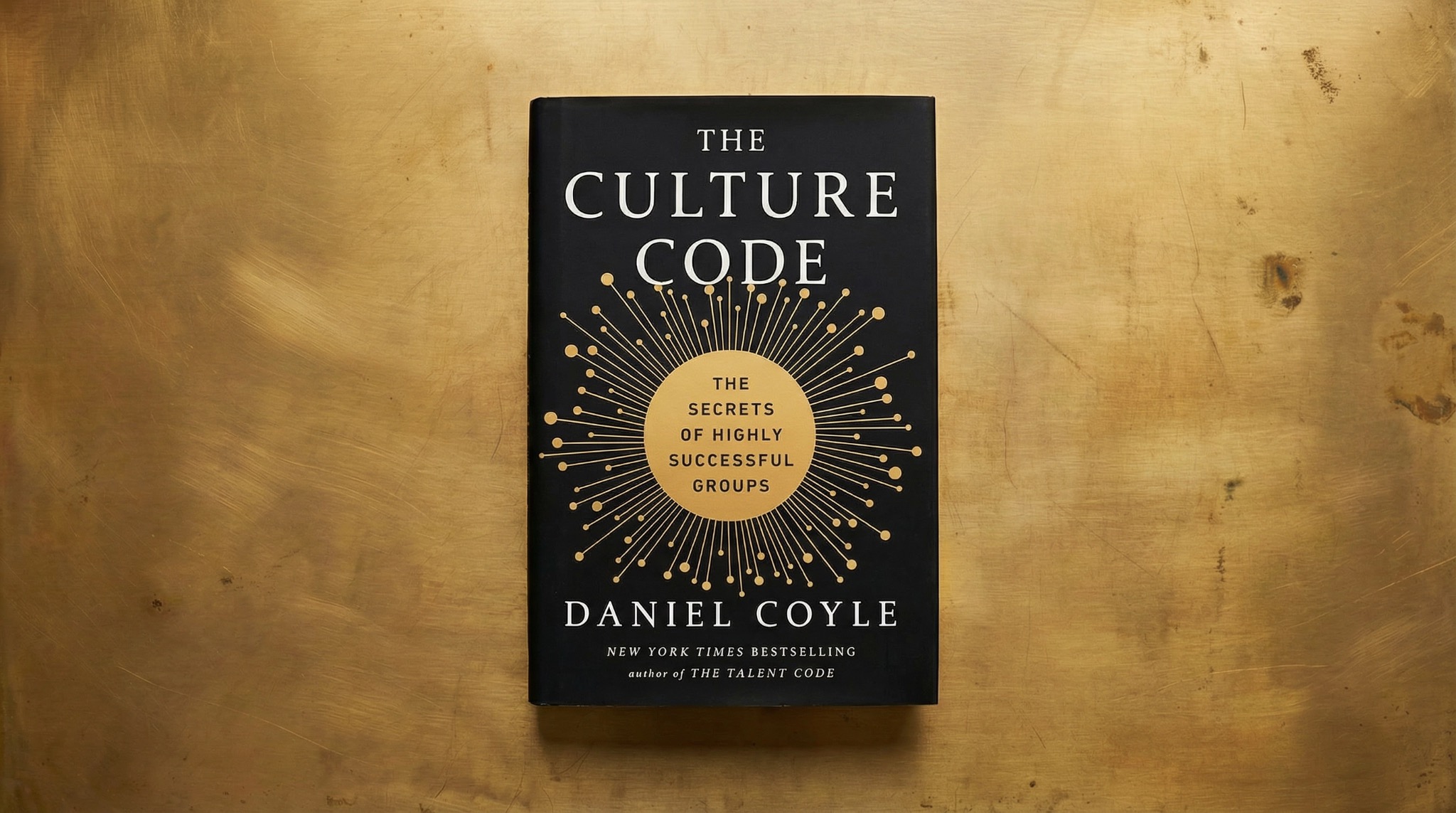
"Culture is not a mood. It is a set of repeatable behaviors that make cooperation possible. Great groups are often distinguished less by grand speeches than by the quality of everyday interactions."
Get This Book
Available on Amazon
Buy on AmazonListen on AudibleAs an Amazon Associate I earn from qualifying purchases.
Our Verdict
EssentialKey Takeaways
- Great cultures are built, not hoped for — culture is a system of repeated behaviors, not a slogan.
- Safety comes first: people cannot contribute fully when they feel guarded or exposed.
- Vulnerability creates trust when leaders model openness and honesty, making candor normal rather than exceptional.
- Purpose keeps teams aligned and focused under pressure — it must be concrete enough to guide daily behavior.
- Culture is shaped by who is in the room and what behavior gets rewarded; a single toxic person can weaken the whole group.
- High performance comes from creating conditions where people trust each other enough to do hard things together.
Full Review
How Great Groups Build Trust, Purpose, And Momentum
The Culture Code is Daniel Coyle's practical study of what makes groups perform at a high level. He argues that elite teams do not rely on talent alone. They create the conditions that let talent work together with trust, clarity, and consistency. The book is especially useful because it translates a soft subject, culture, into something leaders can actually shape.
Coyle's central framework is simple: build safety, share vulnerability, and establish purpose. He uses examples from organizations like the San Antonio Spurs, Navy SEALs, Pixar, and other high-performing groups to show that culture is not a mood. It is a set of repeatable behaviors that make cooperation possible.
Build Safety
Coyle starts with safety because people do not contribute fully when they feel exposed or uncertain. Strong cultures create signals that say, in effect, you belong here and you are safe to speak. That safety is not softness. It is the foundation for candor, learning, and commitment.
He pays close attention to the small behaviors that build belonging: eye contact, turn-taking, attentive listening, energy, and consistency. These may sound minor, but they shape whether people feel included or ignored. In his view, great groups are often distinguished less by grand speeches than by the quality of everyday interactions.
For leaders, this is a useful reminder that culture is built in micro-moments. A team meeting, a one-to-one conversation, or a tense disagreement all send signals about whether the group is safe. If those signals are poor, performance will eventually suffer, even if the strategy is strong.
Share Vulnerability
The second pillar is vulnerability. Coyle argues that trust deepens when people are willing to admit mistakes, ask for help, and show they do not have all the answers. That may feel counterintuitive in competitive environments, but he shows that it is often the basis of strong cooperation.
One of the book's most useful ideas is the vulnerability loop. When one person takes a small risk by being open, the other person responds in kind, and trust grows through that exchange. It is a simple mechanism, but it explains why some teams become honest and adaptive while others stay guarded and performative.
This matters for operators because many organizations unintentionally punish vulnerability. People learn to hide uncertainty, defend weak ideas, and avoid saying what they really think. Coyle's argument is that the healthiest teams do the opposite. They make candor normal enough that truth can move quickly.
Establish Purpose
The third pillar is purpose. Coyle does not treat purpose as vague inspiration or corporate language on a wall. He treats it as a shared direction that helps people decide what matters now. Great teams repeat that purpose often and consistently so that it stays visible under pressure.
He is strong on the idea that purpose has to be concrete enough to guide behavior. A group needs a clear story about where it is going and why. That story gives people a way to interpret tradeoffs, stay aligned, and keep working when the immediate environment is difficult.
From a leadership perspective, this is one of the most actionable parts of the book. Purpose is not useful if it sits above the work. It has to shape the work itself. The best cultures turn abstract intent into daily habits and repeated language.
Culture As A System
One of the book's strongest contributions is that it treats culture as a system, not a slogan. A strong culture is made of behaviors, communication norms, leadership habits, and repeated signals. That means culture can be designed, reinforced, and improved rather than simply hoped for.
Coyle is also clear that a bad culture can spread quickly. A single toxic person can damage trust, energy, and collaboration. That is why hiring, feedback, and leadership standards matter so much. Culture does not just happen to a group. It gets shaped by who is in the room and what behavior is rewarded.
This systems view is especially relevant in high-pressure environments. Under stress, people revert to the norms they have practiced most. If those norms are opaque, defensive, or ego-driven, the group becomes brittle. If they are open, accountable, and purpose-led, the group becomes resilient.
Why It Resonates
The Culture Code resonates because it connects leadership to real human behavior. It does not reduce success to charisma or raw intelligence. It shows that high performance comes from creating the conditions in which people can trust each other enough to do hard things together.
The book also has broad application. It works for sports teams, business units, creative groups, and any organization that depends on coordination. That makes it useful for leaders who need more than theory. It gives them a language for what to observe and what to change.
Its biggest strength is that it is practical without becoming mechanical. Coyle respects the emotional side of culture, but he never lets it become vague. He keeps returning to actions, cues, and habits. That makes the book approachable and operational at the same time.
Final Thoughts
The Culture Code is one of the best practical books on what makes groups work. Coyle avoids the trap of making culture sound mystical. He grounds it in observable behaviors and specific habits. For leaders trying to build something durable, the book offers a clear framework: safety, vulnerability, and shared purpose are not soft concepts. They are the foundation of high performance.
Enjoyed this review?
Subscribe for more curated book recommendations and insights from the 200 books journey.
No spam. Unsubscribe anytime.
Get This Book
Available on Amazon
Buy on AmazonListen on AudibleAs an Amazon Associate I earn from qualifying purchases.
Our Verdict
EssentialAlso Worth Exploring
Tools and services I use and recommend.
Some links are affiliate links. I only recommend things I genuinely use.
Get Book Recommendations
Weekly picks from the 200 books journey.
No spam. Unsubscribe anytime.
Keep Reading
Read Next
More from Business & Leadership worth your time


Reader Reviews
No reviews yet. Be the first to share your thoughts!