
Save books, track your reading goal, and leave reviews. Free to join.
Create free account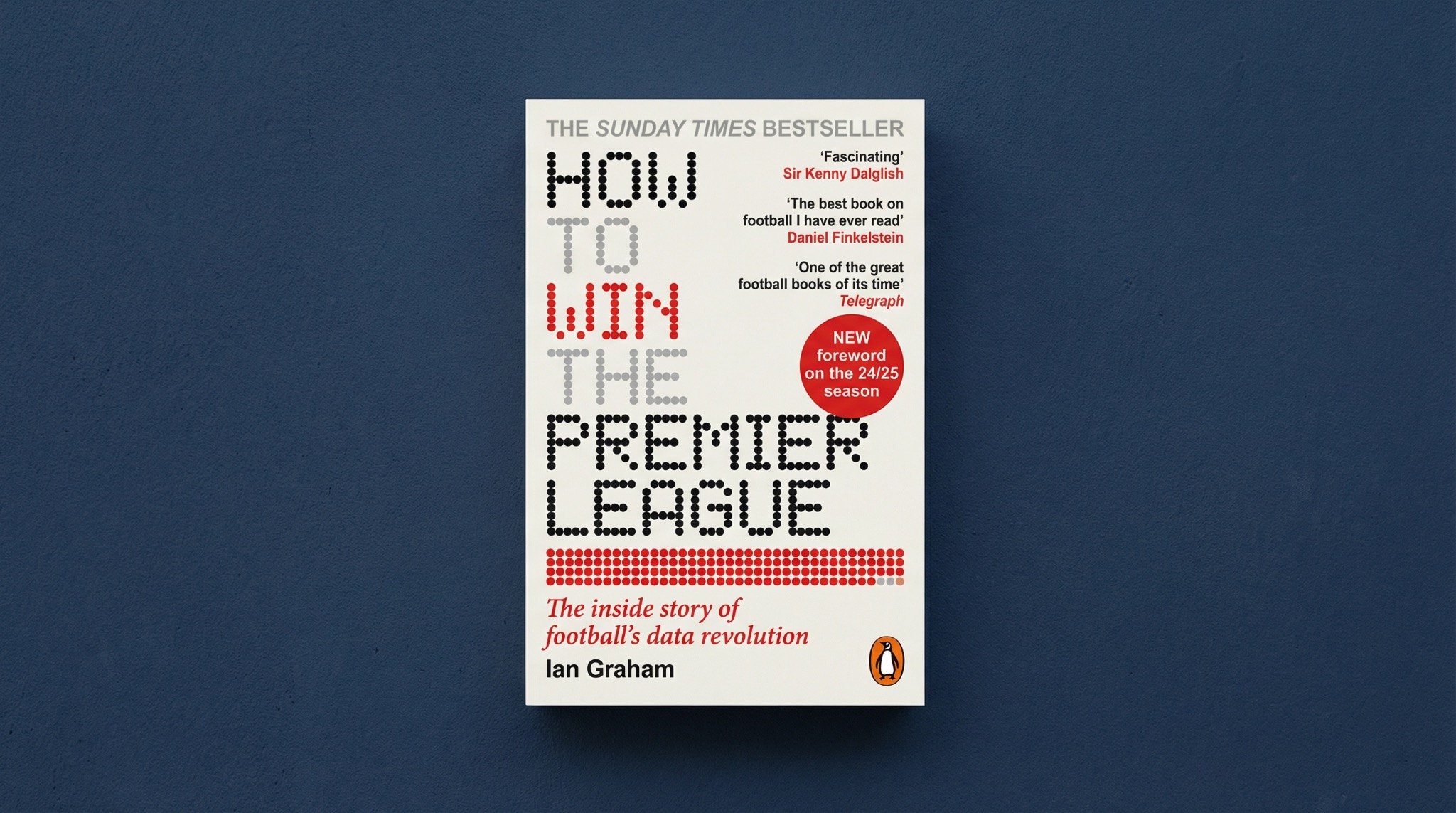
"Graham is not arguing that data replaces scouting, coaching, intuition, or leadership. He is arguing that data sharpens all of them."
Get This Book
Available on Amazon
Buy on AmazonListen on AudibleAs an Amazon Associate I earn from qualifying purchases.
Our Verdict
RecommendedKey Takeaways
- Data helps clubs find small edges that compound over time — the goal is to be better than competitors at making decisions, not perfect.
- Recruitment works best when it is built around fit to the system and budget, not reputation.
- Managerial appointments should align with the club's broader model, not just the loudest name in the room.
- Good football decisions are probabilistic, not certain — the aim is to stack the odds, not guarantee outcomes.
- Better process creates a better chance of long-term success; good decisions compound across seasons.
- Liverpool's rise was built on alignment between research, leadership, and execution — not any single brilliant move.
Full Review
The Data Behind Liverpool's Rise
How to Win the Premier League is Ian Graham's insider account of how Liverpool used data to build a sustained competitive edge and turn that edge into a title. It is a football book, but it reads like an operator's manual for decision making under pressure. Graham shows how clubs win not by chasing headlines, but by making better choices more consistently than everyone else.
The book matters because it explains the logic behind modern success without reducing football to spreadsheets. Graham is not arguing that data replaces scouting, coaching, intuition, or leadership. He is arguing that data sharpens all of them. In his view, the best clubs create an environment where evidence improves judgment instead of competing with it.
The Case For Data
Graham's central argument is straightforward: in elite football, small edges matter, and data can identify them before rivals do. A club does not need to be perfect. It needs to be better than competitors at recruiting, game planning, and sequencing decisions across many seasons. That is where a research department can change outcomes.
What gives the book weight is that Graham is not speaking as an outsider. He was there when Liverpool built one of the most successful periods in the club's modern history. He describes how research influenced major decisions, including the hiring of Jürgen Klopp and the signing of Mohamed Salah. Those examples give the book its credibility because they show data informing moments that shaped a title-winning trajectory.
Graham is careful not to oversell certainty. Football remains noisy, human, and often irrational. But the book makes a persuasive case that better process increases the odds of better results. In a sport where randomness is always present, the edge belongs to clubs that reduce avoidable mistakes.
Recruitment And Squad Building
The strongest parts of the book are about recruitment. Graham shows that successful clubs do not simply identify the best players in a vacuum. They identify the best players for their system, their budget, and their future plans. That distinction is crucial because many clubs waste money buying reputation instead of fit.
He also explains why recruitment should be judged over time, not after one match or one transfer window. A good signing is one that improves the team's chance of winning across multiple seasons. That means analysts and decision makers need to think probabilistically, not emotionally. The goal is not certainty. The goal is to stack the odds.
This is where the book becomes especially useful for leaders outside football. The lesson is that talent decisions should be structured, repeatable, and accountable. When organizations chase short term relief, they often pay for it later. Graham's Liverpool story is a reminder that good process compounds.
Managerial Decisions And Fit
One of the book's most interesting themes is managerial fit. Graham shows that choosing a manager is not just about charisma or reputation. It is about whether the manager's approach matches the club's model, recruitment pipeline, and competitive ambitions. In Liverpool's case, Klopp represented more than a tactical upgrade. He fit the club's broader direction.
That is a valuable operator lesson because many organizations hire for the wrong reasons. They hire the loudest voice, the most famous name, or the person who sounds most convincing in the room. Graham's analysis suggests that the right question is more disciplined: what kind of leader will amplify the system we are trying to build?
The book also makes clear that managers and analysts do not have to be in conflict. The best environments combine coaching instinct with data support. When that relationship works, the club can move faster and make fewer expensive errors. When it breaks down, politics replaces performance.
The Myths Of Football
Graham is most persuasive when he challenges accepted football wisdom. He questions assumptions about home advantage, player valuation, and the importance of certain kinds of "big game" narratives. His point is not that tradition is useless. It is that tradition often hardens into bad analysis when nobody tests it.
That spirit gives the book real energy. It asks readers to examine what they think they know. In football, people often confuse confidence with insight. A strong opinion can sound like expertise even when it rests on habit, bias, or selective memory. Graham's work pushes back against that.
This is one reason the book feels modern. It treats football as a domain where evidence can reveal hidden structure. That does not make the game mechanical. It makes it more legible. Better understanding leads to better decisions, even when the final outcome still depends on execution, luck, and resilience.
What Liverpool Got Right
Liverpool's success, as Graham tells it, came from aligning research, recruitment, and leadership around the same objective. The club did not rely on data alone. It used data to improve the quality of every major decision. That kind of alignment is rare, and it is why the story is so compelling.
The book shows how momentum in football is built over years, not weeks. Good appointments lead to better squad building. Better squad building supports the manager. The manager's success reinforces the model. Eventually, the club looks unstoppable, but the underlying advantage was created long before the trophies arrived.
That is the most useful takeaway for any executive. Winning is rarely the result of one brilliant move. It is usually the outcome of many good decisions made in the right order. Graham's book shows how that looks in practice.
Why It Stands Out
How to Win the Premier League stands out because it is both analytical and human. Graham writes with the authority of someone who lived the story, but he never turns the book into self-congratulation. Instead, he explains how hard it is to build a culture that actually listens to evidence.
The book also lands well because it respects football's complexity. It does not pretend that data can solve everything. It argues that data can stop clubs from being careless. In a league where budgets are huge and margins are thin, that may be the more important point. The clubs that endure are usually the ones that make fewer foolish decisions.
For readers interested in sport, leadership, and commercial performance, the book offers something valuable: a model of disciplined advantage. It is not about magic. It is about process, humility, and the willingness to let evidence challenge instinct.
Final Thoughts
How to Win the Premier League is a smart, disciplined book that takes football analytics seriously without losing sight of the game's complexity. Mackay makes a strong case that data is not a replacement for judgment but a check on bad judgment. For anyone working in professional sport, the book is a useful reminder that competitive advantage often comes from making fewer mistakes rather than making more brilliant decisions.
Enjoyed this review?
Subscribe for more curated book recommendations and insights from the 200 books journey.
No spam. Unsubscribe anytime.
Get This Book
Available on Amazon
Buy on AmazonListen on AudibleAs an Amazon Associate I earn from qualifying purchases.
Our Verdict
RecommendedAlso Worth Exploring
Tools and services I use and recommend.
Some links are affiliate links. I only recommend things I genuinely use.
Get Book Recommendations
Weekly picks from the 200 books journey.
No spam. Unsubscribe anytime.
Keep Reading
Read Next
More from Sports Business worth your time


Reader Reviews
No reviews yet. Be the first to share your thoughts!