
Save books, track your reading goal, and leave reviews. Free to join.
Create free account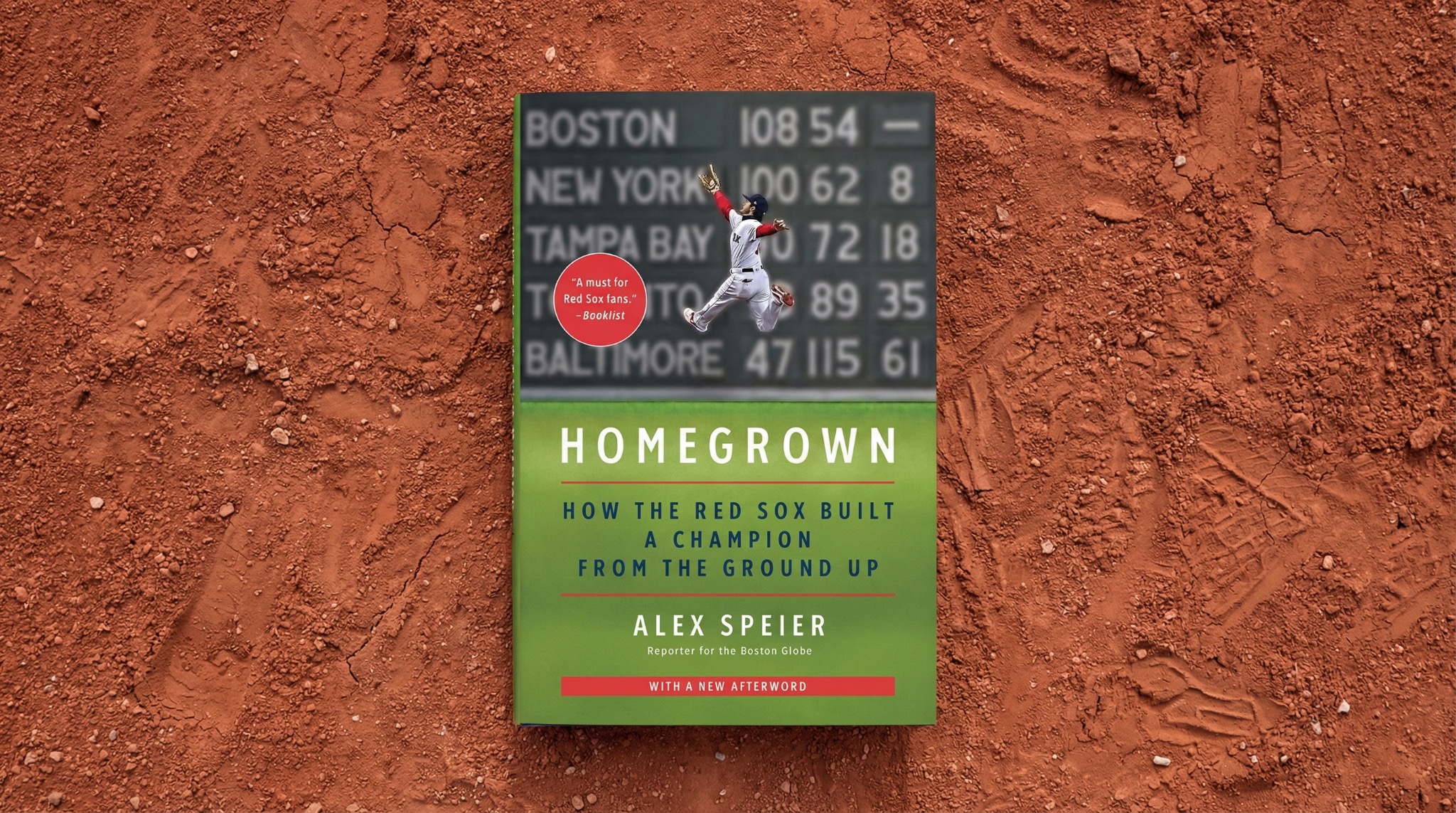
"Homegrown offers the definitive account of player development's power to forge champions. Alex Speier combines exhaustive reporting with strategic insight, revealing how Boston constructed baseball's best team. Sports executives gain a masterclass in talent pipelines, applicable from pitches to partnerships. The story proves that deliberate process trumps splashy acquisition every time."
Get This Book
Available on Amazon
Buy on AmazonListen on AudibleAs an Amazon Associate I earn from qualifying purchases.
Our Verdict
RecommendedKey Takeaways
- Scouting success blends data, gut, and intangibles like coachability.
- Development demands daily repetition and individualized coaching.
- Integrate prospects gradually to preserve veteran harmony.
- Patience through losses builds sustainable contention.
- Leadership philosophy must adapt without losing core principles.
- Homegrown cores create culture but require constant replenishment.
Full Review
Homegrown chronicles the Boston Red Sox's remarkable rise to the 2018 World Series title through player development rather than blockbuster trades or free agent splurges. Alex Speier, a longtime Red Sox beat writer, traces the journey of a homegrown core from draft day to championship parade. The book blends granular reporting with broader lessons on scouting, coaching, and the delicate balance between immediate contention and long-term growth.
Speier covered these players, Mookie Betts, Xander Bogaerts, Andrew Benintendi, Rafael Devers, and others, from their minor league days. He interviewed executives, coaches, players, and families to reveal how raw talent becomes elite performance. The narrative spans 2011 to 2018, a period of front office transitions, farm system overhauls, and cultural shifts that turned a middling organization into baseball's best.
For operators in talent-heavy industries, the story offers a blueprint. Success came from aligning scouting, development, and major league integration around clear principles. Football clubs face similar challenges: identify prospects, nurture them through pressure, and integrate without disrupting winning teams.
Scouting and the draft lottery
Speier opens with the 2011 draft, a pivotal moment. The Red Sox held the 19th pick after a 90-win season. They targeted high school shortstop Xander Bogaerts from Aruba, betting on international upside despite rawness. That selection set the tone for a development-focused philosophy.
Luck played a role. A late 2011 loss dropped Boston in the 2015 draft order, landing outfielder Andrew Benintendi. Speier details the analytics versus scouting debates that shaped these choices. The organization leaned on cross-checkers who saw work ethic and adaptability beyond stat lines.
Operators recognize this tension. Data identifies candidates, but human judgment separates good from great. In sports commercialization, sponsorship scouts face parallel decisions: which emerging brands have partnership potential worth nurturing over proven names.
The book stresses process over outcome. Boston built a scouting network that valued intangibles like coachability. They trusted evaluations through years of iteration, even when early results disappointed. That patience paid dividends.
Development pipeline
Chapters on the minors reveal Boston's farm system renaissance. After a 2011 collapse, ownership demanded accountability. New vice president Mike Hazen overhauled player development, emphasizing repeatable mechanics, mental conditioning, and position versatility.
Speier profiles hitting coordinator Tim Hyers, who transformed swing paths through video and repetition. Mookie Betts, a second baseman with plus speed, became a right field star through outfield drills. Rafael Devers refined plate discipline during injury rehab. These stories show development as daily grind, not magic.
Coaches tailored approaches to personalities. Bogaerts needed confidence boosts. Benintendi required power development. The system rewarded experimentation, with players testing roles across levels. Failures, like early strikeouts, became adjustment data.
Football academies mirror this. Young talents cycle through U-18, U-23, and first team loans. The best systems track metrics while preserving individuality. Speier's account shows how Boston measured progress beyond batting average: launch angle gains, zone discipline, defensive range.
Integration challenges
Promoting prospects to the majors tests organizational alignment. Speier recounts 2016, when Benintendi debuted amid a playoff push. Manager John Farrell balanced veteran respect with youth infusion. Bogaerts mentored Devers during 2017 slumps.
Trade deadline decisions crystallized philosophy. Boston dealt relievers for prospects rather than rentals, prioritizing pipeline depth. That 2017 fire sale, unpopular at the time, stocked the system for 2018 dominance.
Cultural fit mattered. Veterans like Dustin Pedroia embraced mentorship, sharing at-bats and locker room wisdom. Speier captures clubhouse dynamics where stars elevated rookies rather than guarding turf. This unity fueled chemistry.
Operators see parallels in revenue teams. Integrating junior partnership managers into senior deals requires trust. Seasoned execs must model collaboration, passing knowledge without resentment. Missteps erode momentum; alignment accelerates it.
Championship culmination
The 2018 season serves as payoff. Boston won 108 games behind a rotation of homegrown starters and a lineup blending youth with experience. Speier dissects the playoffs, where Betts's MVP postseason and Devers's clutch hits embodied development success.
President Dave Dombrowski balanced contention with cultivation. He platooned prospects, preserving service time while testing readiness. Cora's player-first managing style maximized the core's strengths.
Speier reflects on sustainability. Post-title, Boston traded some architects and faced regression. The book warns that homegrown windows close without constant replenishment. Scouting must evolve; coaches depart; talents plateau.
Leadership and philosophy shifts
Front office evolution drives the narrative. Ben Cherington built the base. Hazen refined development. Dombrowski added win-now pieces without gutting the farm. Each leader adapted the system to market realities.
Speier credits ownership's patience. John Henry tolerated losing seasons for pipeline bets. That long view contrasted with rivals' spending sprees. Yankee trades and free agency yielded contenders but rarely dynasties.
The book humanizes executives. Hazen battled burnout. Chaim Bloom, his successor, inherited pressure to sustain excellence. Leadership succession tests cultures. Boston's emphasis on collaboration eased transitions.
For CROs, this translates to portfolio management. Balance short-term sponsorship revenue with emerging brand cultivation. Leadership changes disrupt unless principles outlast individuals.
Lessons beyond baseball
Homegrown transcends Red Sox fans. Speier asks universal questions. Why do prospects fail? How do organizations maximize investment? How to balance now and later? Answers lie in process rigor, people alignment, and adaptive cultures.
The book critiques hype. High picks bust when development lags. Obscure talents thrive through coaching. Metrics guide but do not dictate. Football scouts face identical risks with academy graduates.
Speier celebrates serendipity within structure. Injuries created opportunities. Late bloomers forced patience. Success emerged from thousands of small decisions compounding over years.
Final Thoughts
Homegrown is a thoughtful, well-structured book on one of the most important and underexplored questions in professional sport: how do you build talent from within rather than buying it? Speier's framework is practical and grounded in real experience. For executives in sport or any talent-intensive industry, the book offers a compelling case that the most durable competitive advantages are the ones you grow yourself.
Enjoyed this review?
Subscribe for more curated book recommendations and insights from the 200 books journey.
No spam. Unsubscribe anytime.
Get This Book
Available on Amazon
Buy on AmazonListen on AudibleAs an Amazon Associate I earn from qualifying purchases.
Our Verdict
RecommendedAlso Worth Exploring
Tools and services I use and recommend.
Some links are affiliate links. I only recommend things I genuinely use.
Get Book Recommendations
Weekly picks from the 200 books journey.
No spam. Unsubscribe anytime.
Keep Reading
Read Next
More from Sports Business worth your time


Reader Reviews
No reviews yet. Be the first to share your thoughts!